
What "Picture Lock" Means
Updated: Sep 4
Every project we produce moves through two phases: Phase 1 - Editorial is where we decide what's in the video: the clips, the order, the pacing, the length, the words on screen. Phase 2 - Finishing is where we polish how it looks and sounds: color, music, sound design, graphics, transitions, effects.
(For more info about these phases, see Our Post-Production Process: The Complete Guide.)
Picture lock is the gate between Editorial and Finishing. It's the point where editorial is approved and closed, and finishing begins.

From lock onward, what's in the video is fixed; everything that follows changes how it's presented, not what it contains. This page explains what that means and what it asks of you.
Why we need it
Everything in finishing is built against specific moments in the cut.
A music cue lands on a particular edit.
A graphic is timed to a particular line.
A color grade is matched shot to shot.
If the picture moves after that work is done, all of it moves with it, and a section that shifts by a few seconds can push every card, cue, and transition behind it out of position. That's work done twice, and it usually adds cost and pushes the delivery date.

Locking the picture first means every finishing decision is made once, against something that isn't going to change underneath it.
This principle holds at any scale. A national commercial with full passes through sound design, color grading, and visual effects departments reaches picture lock before any of that begins. A one-minute promo that gets its color, graphics, and music in a single pass reaches picture lock first too. The scale of what comes after changes with the project. The gate itself doesn't.
What lock isn't
It is not the final video. The cut you approve for picture lock is deliberately unfinished, with placeholder text, no color, and temp or no music.

It is not the end of your input either. You'll review the finished version and give notes on how it looks and sounds. And it isn't us saying the content is perfect. It's you saying the content is right. That's your call, and we don't move forward without it.
What we ask of you
Watch the cut with one question in mind: is the content right? If a line should go, a section should move, or something is missing, say so now.
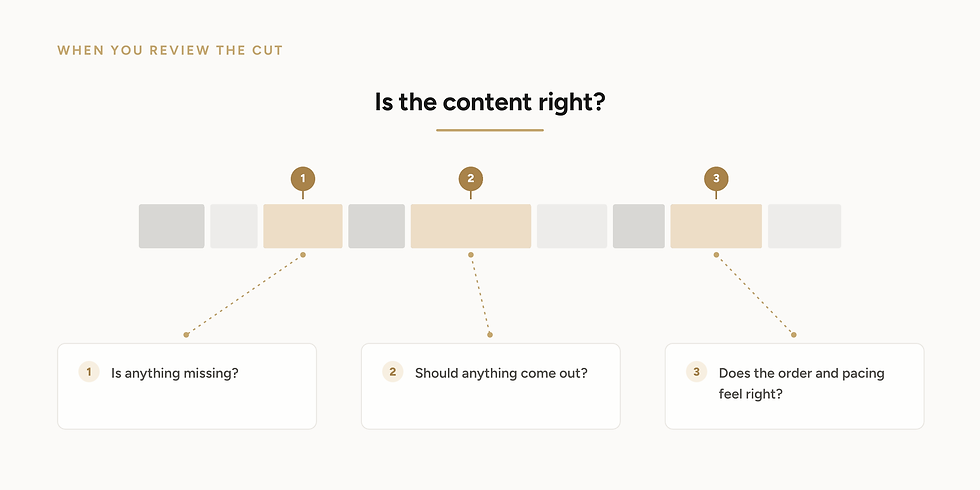
Those changes are quick and expected during editorial. If it plays the way you want, reply with your approval. Your producer confirms the lock, and finishing begins.
Changes after lock
Once picture is locked, content changes are no longer revisions. They're scope changes. Undermost agreements, that means they're billed and quoted separately, and they carry real cost because finishing work built on the previous cut has to be redone.

A content change after lock sends the project back to editorial for a new version and a new lock, and finishing restarts from there.
This is why the decisions about content get made before you approve, not after. If you're on the fence about anything in the cut, raise it BEFORE picture lock is established.
Related reading
For the full picture of how a project moves through post-production, from first editorial cut to final delivery, see Our Post-Production Process: The Complete Guide.
To understand more about its origin, see The History of Picture Lock